Iran's Khamenei urges Gulf rulers in written message to confront 'real enemy' - Reuters
Iran’s Supreme Leader Ayatollah Ali Khamenei sent a handwritten appeal to Gulf rulers urging them to unite against what he called the “real enemy” – the United States and its allies. While the message underscores Iran’s push for economic independence from the dollar, Gulf states have responded cautiously, signaling limited willingness to align overtly with Tehran’s call for collective opposition.
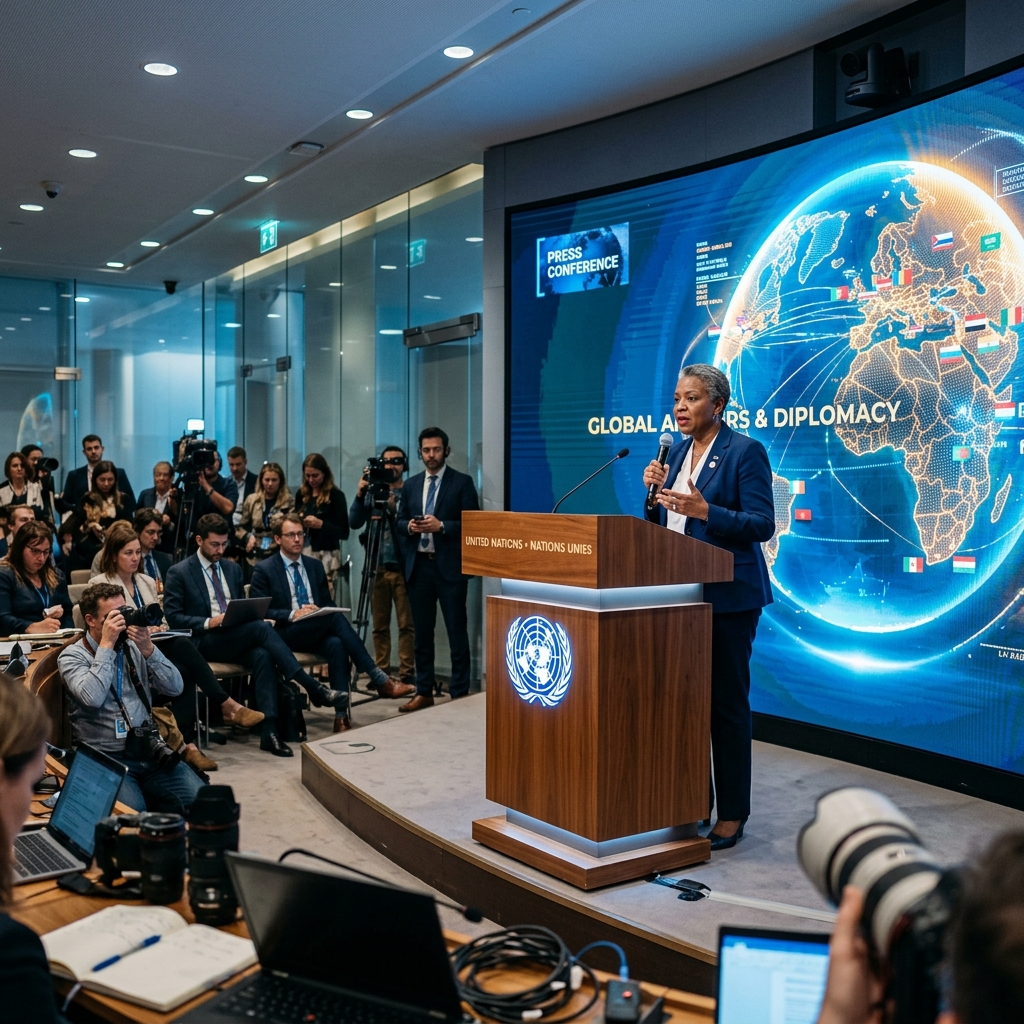
AI Objective Summary
Iran’s Supreme Leader Ayatollah Ali Khamenei sent a handwritten appeal to Gulf rulers urging them to unite against what he called the “real enemy” – the United States and its allies. While the message underscores Iran’s push for economic independence from the dollar, Gulf states have responded cautiously, signaling limited willingness to align overtly with Tehran’s call for collective opposition.
*Generated automatically for transparency. Verified for objective reporting.
**Iran’s Supreme Leader Sends Gulf Rulers a Call for Unity Against “Real Enemy”**
In a handwritten note addressed to the heads of state of the Gulf Cooperation Council (GCC), Iran’s Supreme Leader Ayatollah Ali Khamenei urged the region’s monarchs to “identify your real enemy” and unite in its defense. The message, obtained by *Reuters* and circulated among diplomatic circles on Tuesday, warned that the “real enemy” of the Muslim world is the United States and its allies, whose policies, according to Khamenei, aim to destabilise the region and suppress Islamic solidarity. He also emphasized the need for “mutual respect, coordination and cooperation” among the Gulf nations, urging them to reject external pressure and “protect the interests of the Islamic Ummah.”
Khamenei’s appeal comes amid heightened geopolitical tension in the Persian Gulf, where the fallout from the Israel‑Hamas war, renewed U.S. naval deployments and a series of sanctions on Tehran have intensified regional rivalries. In the same message, the Supreme Leader cited Iran’s recent shift away from reliance on the U.S. dollar—an economic strategy highlighted in a *CNBC* report on declining Iranian trade—as a practical illustration of resisting “American hegemony.” By coupling political solidarity with economic independence, Khamenei sought to present a comprehensive framework for confronting what he portrays as a coordinated Western effort to curtail both the political influence and financial autonomy of Muslim states.
Reactions from GCC leaders have been cautious. While some officials refrained from commenting publicly, a spokesperson for the Saudi foreign ministry described the note as “an internal matter for the Islamic world” and emphasized Riyadh’s commitment to “regional stability and constructive dialogue.” The United Arab Emirates, in a brief statement, reiterated its “open channels of communication” with Tehran but stopped short of endorsing the call for collective opposition to the United States. International analysts, such as those cited by *The Hindu* and *The Times of India*, view the message as a symbolic gesture aimed at bolstering Iran’s soft power rather than a concrete step toward a new regional bloc, noting that longstanding sectarian divides and divergent economic interests continue to limit the prospect of a unified Gulf front.
Public Comments Board
Objective discourse and feedback logs (0)